Reference Library
Identity and handling data for every research compound in our catalog, in one place. For laboratory research use only — see each entry's Certificate of Analysis for batch-specific verification.
For research purposes only. Not for human or veterinary use.
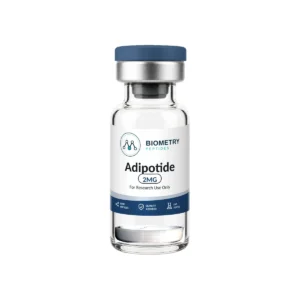
Adipotide (FTPP)
Adipotide (FTPP) is a peptidomimetic conjugate linking a fat-vasculature-homing sequence (targeting prohibitin on adipose blood vessel endothelium) to a pro-apoptotic KLAKLAK domain. Research has studied its selective induction of apoptosis in the vascular endothelium supplying white adipose tissue, examined in models of adipose tissue mass regulation.
| Sequence / IUPAC | Fat-vasculature-homing peptide conjugated to a pro-apoptotic (KLAKLAK) domain |
| Physical form | Lyophilised powder |
| Purity method | Verified by HPLC and mass spectrometry per batch COA (COA to be linked per batch). |
| Storage | Store lyophilised powder at -20°C, protect from light and moisture. Handle as a laboratory reagent; use standard cold-chain practice once reconstituted. |
View product
For research purposes only. Not for human or veterinary use.
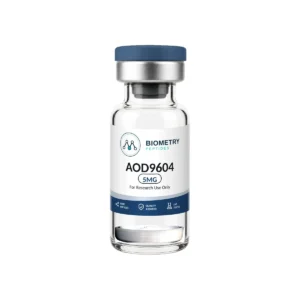
AOD9604
AOD9604 is a modified fragment of the human growth hormone molecule (hGH 176-191) with an added tyrosine residue. Research has focused on its lipolytic activity -- a GH fragment associated with fat-metabolism regulation independent of the GH receptor's growth-promoting effects -- studied in models of adipocyte lipolysis and lipogenesis.
| CAS number | 221231-10-3 |
| Molecular weight | ~1815.05 g/mol (commonly reported) |
| Sequence / IUPAC | Modified hGH(176-191) fragment with added tyrosine |
| Physical form | Lyophilised powder |
| Purity method | Verified by HPLC and mass spectrometry per batch COA (COA to be linked per batch). |
| Storage | Store lyophilised powder at -20°C, protect from light and moisture. Handle as a laboratory reagent; use standard cold-chain practice once reconstituted. |
View product
For research purposes only. Not for human or veterinary use.
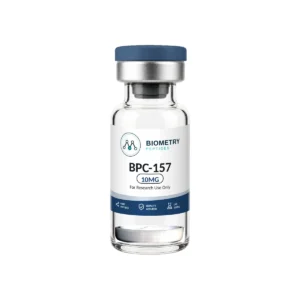
BPC-157
BPC-157 is a synthetic pentadecapeptide derived from a partial sequence of body protection compound (BPC) found in human gastric juice. Preclinical research has studied its role in accelerating repair of tendon, ligament, muscle, and gastrointestinal tissue in animal models, with proposed mechanisms including promotion of angiogenesis (via VEGFR2 pathway activation), fibroblast migration, and modulation of nitric oxide signaling. It is also studied in gut-mucosa integrity and inflammatory bowel research models.
| CAS number | 137525-51-0 |
| Molecular formula | C62H98N16O22 |
| Molecular weight | 1419.53 g/mol |
| Sequence / IUPAC | Gly-Glu-Pro-Pro-Pro-Gly-Lys-Pro-Ala-Asp-Asp-Ala-Gly-Leu-Val |
| Physical form | Lyophilised powder |
| Purity method | Verified by HPLC and mass spectrometry per batch COA (COA to be linked per batch). |
| Storage | Store lyophilised powder at -20°C, protect from light and moisture. Handle as a laboratory reagent; use standard cold-chain practice once reconstituted. |
View product
For research purposes only. Not for human or veterinary use.
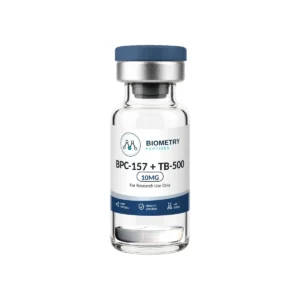
BPC-157 + TB-500 Blend
This is a combination research blend of BPC-157 and TB-500, two peptides frequently studied together in tissue-repair research due to their reported complementary mechanisms -- BPC-157's studied effects on angiogenesis and gut-mucosa stability alongside TB-500's studied role in actin regulation and cell migration. See the individual BPC-157 and TB-500 entries in this library for full identity data on each component.
| Sequence / IUPAC | Combination of BPC-157 and TB-500 (see individual entries) |
| Physical form | Lyophilised powder |
| Purity method | Verified by HPLC and mass spectrometry per batch COA (COA to be linked per batch). |
| Storage | Store lyophilised powder at -20°C, protect from light and moisture. Handle as a laboratory reagent; use standard cold-chain practice once reconstituted. |
View product
For research purposes only. Not for human or veterinary use.
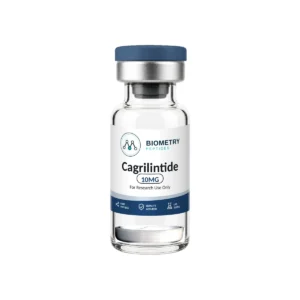
Cagrilintide
Cagrilintide is a long-acting acylated analog of human amylin, a pancreatic peptide hormone. Research has focused on its action as an amylin receptor agonist, studied for its role in modulating gastric emptying, satiety signaling, and energy-intake regulation in metabolic research models, often examined alongside GLP-1 receptor agonist research.
| Sequence / IUPAC | Long-acting acylated analog of human amylin (37 aa backbone) |
| Physical form | Lyophilised powder |
| Purity method | Verified by HPLC and mass spectrometry per batch COA (COA to be linked per batch). |
| Storage | Store lyophilised powder at -20°C, protect from light and moisture. Handle as a laboratory reagent; use standard cold-chain practice once reconstituted. |
View product
For research purposes only. Not for human or veterinary use.
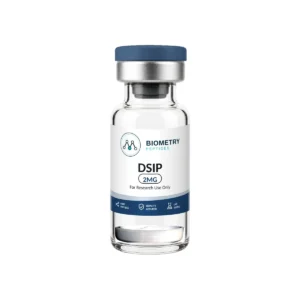
DSIP
Delta sleep-inducing peptide (DSIP) is a nonapeptide originally isolated from rabbit cerebral venous blood. Research has studied its association with delta-wave EEG activity during sleep, along with proposed roles in stress-hormone regulation and circadian research models, though its precise receptor mechanism remains an active research question.
| CAS number | 62568-57-4 |
| Molecular formula | C35H48N10O15 |
| Molecular weight | 848.8 g/mol |
| Sequence / IUPAC | Trp-Ala-Gly-Gly-Asp-Ala-Ser-Gly-Glu |
| Physical form | Lyophilised powder |
| Purity method | Verified by HPLC and mass spectrometry per batch COA (COA to be linked per batch). |
| Storage | Store lyophilised powder at -20°C, protect from light and moisture. Handle as a laboratory reagent; use standard cold-chain practice once reconstituted. |
View product
For research purposes only. Not for human or veterinary use.
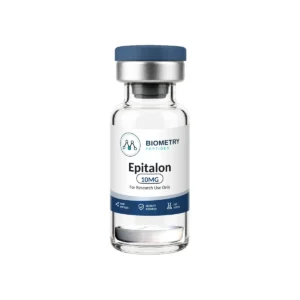
Epitalon
Epitalon (epithalon) is a synthetic tetrapeptide modeled on a natural pineal gland regulatory peptide. Research has studied its proposed role as a telomerase activator in select cell models, along with investigation of its effects on pineal melatonin regulation and circadian research, and its use in Russian gerontology research literature on cellular senescence.
| CAS number | 307297-39-8 |
| Molecular formula | C14H22N4O9 |
| Molecular weight | 390.35 g/mol |
| Sequence / IUPAC | Ala-Glu-Asp-Gly |
| Physical form | Lyophilised powder |
| Purity method | Verified by HPLC and mass spectrometry per batch COA (COA to be linked per batch). |
| Storage | Store lyophilised powder at -20°C, protect from light and moisture. Handle as a laboratory reagent; use standard cold-chain practice once reconstituted. |
View product
For research purposes only. Not for human or veterinary use.
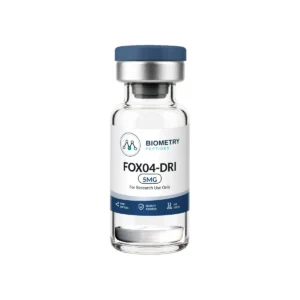
FOX04-DRI
FOXO4-DRI is a D-retro-inverso peptide designed to disrupt the interaction between FOXO4 and p53 within senescent cells. Research has investigated its selective induction of apoptosis in senescent cells by displacing p53 from the FOXO4-p53 nuclear complex, a mechanism studied within the cellular senescence research field.
| Sequence / IUPAC | D-retro-inverso FOXO4-p53 interfering peptide |
| Physical form | Lyophilised powder |
| Purity method | Verified by HPLC and mass spectrometry per batch COA (COA to be linked per batch). |
| Storage | Store lyophilised powder at -20°C, protect from light and moisture. Handle as a laboratory reagent; use standard cold-chain practice once reconstituted. |
View product
For research purposes only. Not for human or veterinary use.
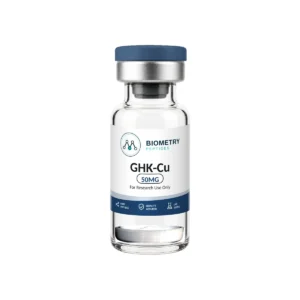
GHK-Cu (Copper Peptide)
GHK-Cu is a naturally occurring copper-binding tripeptide complex found in human plasma that declines with age. Research has focused on its signaling role in dermal fibroblast activity, including stimulation of collagen and glycosaminoglycan synthesis, antioxidant enzyme upregulation, and modulation of gene expression networks linked to tissue remodeling in skin research models.
| CAS number | 89030-95-5 |
| Molecular formula | C14H22CuN6O4 |
| Molecular weight | ~340.9 g/mol (Cu(II) complex, as commonly reported) |
| Sequence / IUPAC | Gly-His-Lys + Cu(II) |
| Physical form | Lyophilised powder |
| Purity method | Verified by HPLC and mass spectrometry per batch COA (COA to be linked per batch). |
| Storage | Store lyophilised powder at -20°C, protect from light and moisture. Handle as a laboratory reagent; use standard cold-chain practice once reconstituted. |
View product
For research purposes only. Not for human or veterinary use.
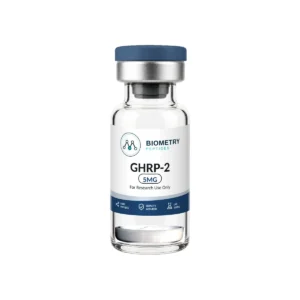
GHRP-2
GHRP-2 (pralmorelin) is a synthetic pentapeptide ghrelin receptor agonist. Research has studied its potent stimulation of pituitary growth hormone secretion, along with secondary effects on appetite signaling via ghrelin-receptor pathways in metabolic and endocrine research models.
| CAS number | 158861-67-7 |
| Molecular formula | C45H55N9O6 |
| Molecular weight | 817.98 g/mol |
| Sequence / IUPAC | D-Ala-D-2-Nal-Ala-Trp-D-Phe-Lys-NH2 |
| Physical form | Lyophilised powder |
| Purity method | Verified by HPLC and mass spectrometry per batch COA (COA to be linked per batch). |
| Storage | Store lyophilised powder at -20°C, protect from light and moisture. Handle as a laboratory reagent; use standard cold-chain practice once reconstituted. |
View product
For research purposes only. Not for human or veterinary use.
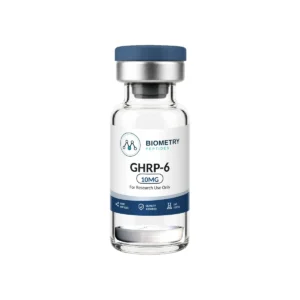
GHRP-6
GHRP-6 is a synthetic hexapeptide ghrelin receptor (GHS-R1a) agonist. Research has focused on its stimulation of pulsatile growth hormone release from the pituitary, as well as ghrelin-receptor-mediated effects studied in appetite and metabolic research models.
| CAS number | 87616-84-0 |
| Molecular formula | C46H56N12O6 |
| Molecular weight | 873.0 g/mol |
| Sequence / IUPAC | His-D-Trp-Ala-Trp-D-Phe-Lys-NH2 |
| Physical form | Lyophilised powder |
| Purity method | Verified by HPLC and mass spectrometry per batch COA (COA to be linked per batch). |
| Storage | Store lyophilised powder at -20°C, protect from light and moisture. Handle as a laboratory reagent; use standard cold-chain practice once reconstituted. |
View product
For research purposes only. Not for human or veterinary use.
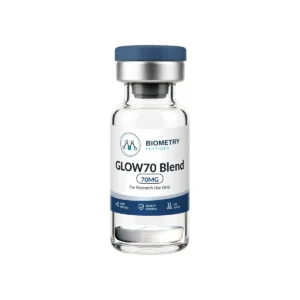
GLOW70 Blend
GLOW is a commonly formulated multi-peptide research blend, typically combining GHK-Cu, BPC-157, and TB-500 (formulation can vary by supplier and batch). It is intended to allow combined research into tissue-repair and dermal-research pathways within a single preparation. Refer to this product's Certificate of Analysis for the batch's exact composition; see the individual GHK-Cu, BPC-157, and TB-500 entries in this library for component-level identity data.
| Sequence / IUPAC | Multi-peptide combination blend (see product COA for exact composition) |
| Physical form | Lyophilised powder |
| Purity method | Verified by HPLC and mass spectrometry per batch COA (COA to be linked per batch). |
| Storage | Store lyophilised powder at -20°C, protect from light and moisture. Handle as a laboratory reagent; use standard cold-chain practice once reconstituted. |
View product
For research purposes only. Not for human or veterinary use.
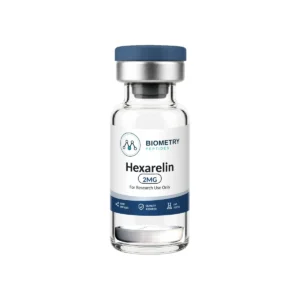
Hexarelin
Hexarelin is a synthetic hexapeptide ghrelin receptor agonist related to GHRP-6 but with greater binding potency. Research has examined its strong stimulation of growth hormone release, along with cardioprotective signaling pathways studied independently of GH receptor activity in cardiac tissue research models.
| CAS number | 140703-51-1 |
| Molecular formula | C47H58N12O6 |
| Molecular weight | 887.0 g/mol |
| Sequence / IUPAC | His-D-2-methyl-Trp-Ala-Trp-D-Phe-Lys-NH2 |
| Physical form | Lyophilised powder |
| Purity method | Verified by HPLC and mass spectrometry per batch COA (COA to be linked per batch). |
| Storage | Store lyophilised powder at -20°C, protect from light and moisture. Handle as a laboratory reagent; use standard cold-chain practice once reconstituted. |
View product
For research purposes only. Not for human or veterinary use.
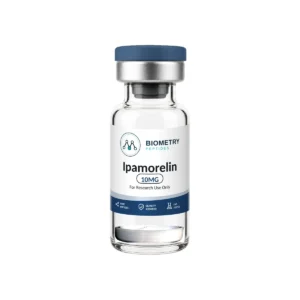
Ipamorelin
Ipamorelin is a synthetic pentapeptide that selectively activates the ghrelin receptor (GHS-R1a). Research has focused on its stimulation of pulsatile growth hormone release from the pituitary with minimal effect on cortisol or prolactin compared to older secretagogues, studied in models of growth hormone axis regulation and lean-mass research.
| CAS number | 170851-70-4 |
| Molecular formula | C38H49N9O5 |
| Molecular weight | 711.85 g/mol |
| Sequence / IUPAC | Aib-His-D-2Nal-D-Phe-Lys-NH2 |
| Physical form | Lyophilised powder |
| Purity method | Verified by HPLC and mass spectrometry per batch COA (COA to be linked per batch). |
| Storage | Store lyophilised powder at -20°C, protect from light and moisture. Handle as a laboratory reagent; use standard cold-chain practice once reconstituted. |
View product
For research purposes only. Not for human or veterinary use.
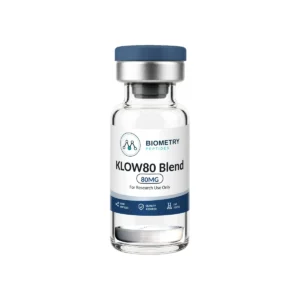
KLOW80 Blend
KLOW is a commonly formulated multi-peptide research blend, typically combining KPV, BPC-157, TB-500, and GHK-Cu (formulation can vary by supplier and batch). It is intended to allow combined research into anti-inflammatory and tissue-repair pathways within a single preparation. Refer to this product's Certificate of Analysis for the batch's exact composition; see the individual KPV, BPC-157, TB-500, and GHK-Cu entries in this library for component-level identity data.
| Sequence / IUPAC | Multi-peptide combination blend (see product COA for exact composition) |
| Physical form | Lyophilised powder |
| Purity method | Verified by HPLC and mass spectrometry per batch COA (COA to be linked per batch). |
| Storage | Store lyophilised powder at -20°C, protect from light and moisture. Handle as a laboratory reagent; use standard cold-chain practice once reconstituted. |
View product
For research purposes only. Not for human or veterinary use.
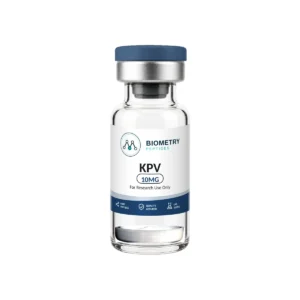
KPV
KPV is the C-terminal tripeptide fragment of alpha-melanocyte-stimulating hormone (alpha-MSH). Research has examined its anti-inflammatory activity independent of melanocortin receptor binding, including studies on NF-kB pathway modulation in models of gut and skin inflammation research.
| CAS number | 63512-37-8 |
| Molecular formula | C16H30N4O4 |
| Molecular weight | ~342.4 g/mol |
| Sequence / IUPAC | Lys-Pro-Val |
| Physical form | Lyophilised powder |
| Purity method | Verified by HPLC and mass spectrometry per batch COA (COA to be linked per batch). |
| Storage | Store lyophilised powder at -20°C, protect from light and moisture. Handle as a laboratory reagent; use standard cold-chain practice once reconstituted. |
View product
For research purposes only. Not for human or veterinary use.
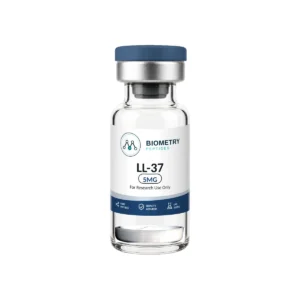
LL-37
LL-37 is the only cathelicidin-family antimicrobial peptide encoded in the human genome, cleaved from the hCAP18 precursor. Research has characterized its broad-spectrum membrane-disrupting activity against bacteria, its immunomodulatory signaling through formyl peptide receptors, and its role in innate immune and wound-healing research models.
| CAS number | 171833-49-3 |
| Molecular weight | ~4493.3 g/mol (commonly reported) |
| Sequence / IUPAC | LLGDFFRKSKEKIGKEFKRIVQRIKDFLRNLVPRTES |
| Physical form | Lyophilised powder |
| Purity method | Verified by HPLC and mass spectrometry per batch COA (COA to be linked per batch). |
| Storage | Store lyophilised powder at -20°C, protect from light and moisture. Handle as a laboratory reagent; use standard cold-chain practice once reconstituted. |
View product
For research purposes only. Not for human or veterinary use.
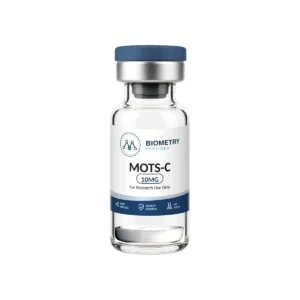
MOTS-c
MOTS-c is a 16-amino-acid mitochondrial-derived peptide encoded within the mitochondrial 12S rRNA region. Preclinical research has investigated its role as a metabolic regulator, including translocation to the nucleus under metabolic stress, activation of AMPK signaling, and effects on glucose uptake and insulin sensitivity in skeletal-muscle research models. It is studied within the broader mitochondrial-derived-peptide field connecting mitochondrial genome output to systemic metabolic regulation.
| CAS number | 1627580-64-6 |
| Molecular weight | ~2174.6 g/mol (commonly reported) |
| Sequence / IUPAC | Met-Arg-Trp-Gln-Glu-Met-Gly-Tyr-Ile-Phe-Tyr-Pro-Arg-Lys-Leu-Arg |
| Physical form | Lyophilised powder |
| Purity method | Verified by HPLC and mass spectrometry per batch COA (COA to be linked per batch). |
| Storage | Store lyophilised powder at -20°C, protect from light and moisture. Handle as a laboratory reagent; use standard cold-chain practice once reconstituted. |
View product
For research purposes only. Not for human or veterinary use.
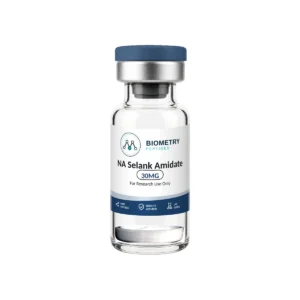
NA Selank Amidate
NA Selank Amidate is an amidated structural analog of Selank, in which the C-terminal proline is modified to an amide form intended to affect enzymatic stability. Research parallels that of Selank, a synthetic tuftsin analog studied for effects on GABAergic and serotonergic signaling in behavioral research models related to stress response.
| Sequence / IUPAC | Amidated C-terminal analog of Selank (Thr-Lys-Pro-Arg-Pro-Gly-Pro-NH2) |
| Physical form | Lyophilised powder |
| Purity method | Verified by HPLC and mass spectrometry per batch COA (COA to be linked per batch). |
| Storage | Store lyophilised powder at -20°C, protect from light and moisture. Handle as a laboratory reagent; use standard cold-chain practice once reconstituted. |
View product
For research purposes only. Not for human or veterinary use.
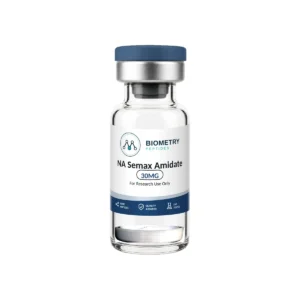
NA Semax Amidate
NA Semax Amidate is an amidated structural analog of Semax with a modified C-terminus intended to affect peptide stability and half-life. Research parallels that of Semax, an ACTH(4-10) heptapeptide analog studied for its effects on brain-derived neurotrophic factor (BDNF) expression in central nervous system research models related to cognition and neuroprotection.
| Sequence / IUPAC | Amidated C-terminal analog of Semax (Met-Glu-His-Phe-Pro-Gly-Pro-NH2) |
| Physical form | Lyophilised powder |
| Purity method | Verified by HPLC and mass spectrometry per batch COA (COA to be linked per batch). |
| Storage | Store lyophilised powder at -20°C, protect from light and moisture. Handle as a laboratory reagent; use standard cold-chain practice once reconstituted. |
View product
For research purposes only. Not for human or veterinary use.
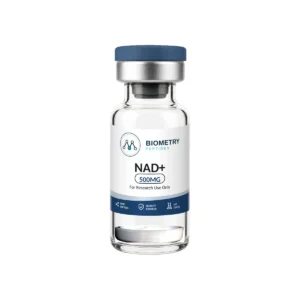
NAD+ (Nicotinamide Adenine Dinucleotide)
NAD+ is a coenzyme central to cellular energy metabolism and redox reactions, and serves as a required substrate for sirtuin enzymes and PARP proteins involved in DNA repair. Research has focused on the age-related decline of cellular NAD+ levels and its studied relationship to mitochondrial function, and NAD+ supplementation research in cell and animal models of metabolic and mitochondrial aging.
| CAS number | 53-84-9 |
| Molecular formula | C21H27N7O14P2 |
| Molecular weight | 663.43 g/mol |
| Sequence / IUPAC | Nicotinamide adenine dinucleotide (oxidized form) |
| Physical form | Lyophilised powder |
| Purity method | Verified by HPLC and mass spectrometry per batch COA (COA to be linked per batch). |
| Storage | Store lyophilised powder at -20°C, protect from light and moisture. Handle as a laboratory reagent; use standard cold-chain practice once reconstituted. |
View product
For research purposes only. Not for human or veterinary use.
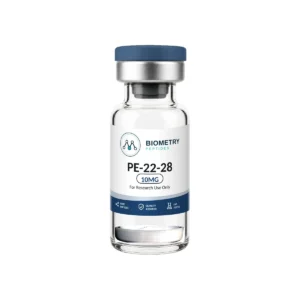
PE-22-28
PE-22-28 is a stabilized synthetic fragment analog of spadin, a peptide derived from the sortilin propeptide region. Research has focused on its activity as a TREK-1 potassium channel antagonist, studied in neuropharmacology models investigating the TREK-1 channel's role in neuronal excitability and mood-related signaling pathways.
| Sequence / IUPAC | Stabilized synthetic analog of spadin (sortilin-propeptide-derived fragment) |
| Physical form | Lyophilised powder |
| Purity method | Verified by HPLC and mass spectrometry per batch COA (COA to be linked per batch). |
| Storage | Store lyophilised powder at -20°C, protect from light and moisture. Handle as a laboratory reagent; use standard cold-chain practice once reconstituted. |
View product
For research purposes only. Not for human or veterinary use.
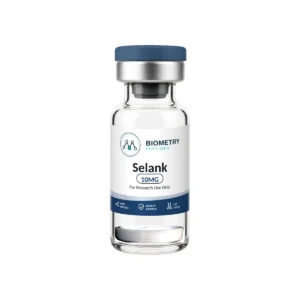
Selank
Selank is a synthetic analog of the endogenous immunomodulatory peptide tuftsin. Research has examined its effects on GABAergic and serotonergic signaling pathways, with animal models studying anxiolytic-type behavioral responses, modulation of the enzyme that degrades enkephalins, and effects on inflammatory cytokine expression.
| CAS number | 129954-34-3 |
| Molecular formula | C33H57N11O9 |
| Molecular weight | 751.9 g/mol |
| Sequence / IUPAC | Thr-Lys-Pro-Arg-Pro-Gly-Pro |
| Physical form | Lyophilised powder |
| Purity method | Verified by HPLC and mass spectrometry per batch COA (COA to be linked per batch). |
| Storage | Store lyophilised powder at -20°C, protect from light and moisture. Handle as a laboratory reagent; use standard cold-chain practice once reconstituted. |
View product
For research purposes only. Not for human or veterinary use.
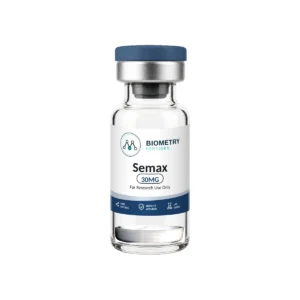
Semax
Semax is a synthetic heptapeptide analog of ACTH(4-10) lacking hormonal activity. Research has studied its effects on brain-derived neurotrophic factor (BDNF) expression and central nervous system signaling, with preclinical models examining cognitive performance, neuroprotection following ischemic injury, and modulation of monoamine neurotransmitter systems.
| CAS number | 80714-61-0 |
| Molecular formula | C37H51N9O10S |
| Molecular weight | 813.9 g/mol |
| Sequence / IUPAC | Met-Glu-His-Phe-Pro-Gly-Pro |
| Physical form | Lyophilised powder |
| Purity method | Verified by HPLC and mass spectrometry per batch COA (COA to be linked per batch). |
| Storage | Store lyophilised powder at -20°C, protect from light and moisture. Handle as a laboratory reagent; use standard cold-chain practice once reconstituted. |
View product
For research purposes only. Not for human or veterinary use.
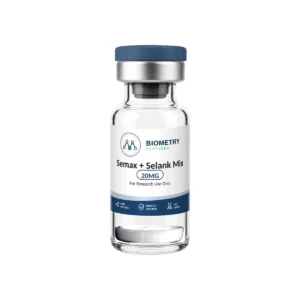
Semax + Selank Mix
This is a combination research blend of Semax and Selank, two structurally related synthetic neuropeptides frequently studied together in central nervous system research. See the individual Semax and Selank entries in this library for full identity data on each component.
| Sequence / IUPAC | Combination of Semax and Selank (see individual entries) |
| Physical form | Lyophilised powder |
| Purity method | Verified by HPLC and mass spectrometry per batch COA (COA to be linked per batch). |
| Storage | Store lyophilised powder at -20°C, protect from light and moisture. Handle as a laboratory reagent; use standard cold-chain practice once reconstituted. |
View product
For research purposes only. Not for human or veterinary use.
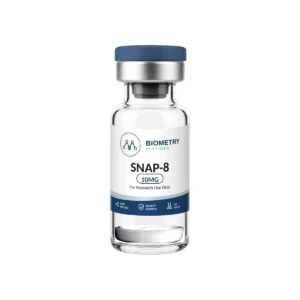
SNAP-8
SNAP-8 is an extended-chain synthetic analog of acetyl hexapeptide-8 (Argireline), modeled on the SNARE-complex-interacting region of SNAP-25. Research has focused on its inhibition of neurotransmitter vesicle docking at neuromuscular junctions, studied in dermatological research models investigating expression-line formation associated with facial muscle contraction.
| CAS number | 868844-74-0 |
| Sequence / IUPAC | Extended-chain analog of acetyl hexapeptide-8 (Argireline) |
| Physical form | Lyophilised powder |
| Purity method | Verified by HPLC and mass spectrometry per batch COA (COA to be linked per batch). |
| Storage | Store lyophilised powder at -20°C, protect from light and moisture. Handle as a laboratory reagent; use standard cold-chain practice once reconstituted. |
View product
For research purposes only. Not for human or veterinary use.
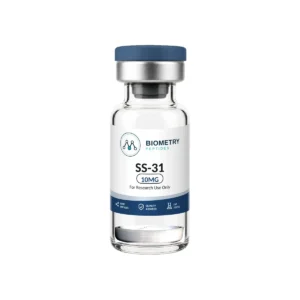
SS-31 (Elamipretide)
SS-31 (elamipretide) is a small mitochondria-targeted tetrapeptide that concentrates at the inner mitochondrial membrane by binding cardiolipin. Research models have examined its role in stabilizing cristae structure, supporting electron transport chain efficiency, and reducing mitochondrial reactive oxygen species production under stress conditions. It has been studied in preclinical models of ischemia-reperfusion injury, age-related mitochondrial decline, and skeletal muscle bioenergetics.
| CAS number | 736992-21-5 |
| Molecular formula | C36H50N8O5 |
| Molecular weight | 654.83 g/mol |
| Sequence / IUPAC | D-Arg-Dmt-Lys-Phe-NH2 |
| Physical form | Lyophilised powder |
| Purity method | Verified by HPLC and mass spectrometry per batch COA (COA to be linked per batch). |
| Storage | Store lyophilised powder at -20°C, protect from light and moisture. Handle as a laboratory reagent; use standard cold-chain practice once reconstituted. |
View product
For research purposes only. Not for human or veterinary use.
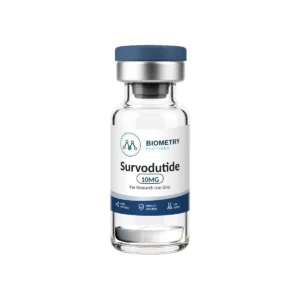
Survodutide
Survodutide is a synthetic peptide dual agonist acting on both the glucagon receptor and the GLP-1 receptor. Research has examined its combined incretin and glucagon-pathway activity, studied in metabolic research models for its effects on energy expenditure, hepatic fat content, and glycemic regulation.
| Sequence / IUPAC | Dual GLP-1 / glucagon receptor agonist peptide |
| Physical form | Lyophilised powder |
| Purity method | Verified by HPLC and mass spectrometry per batch COA (COA to be linked per batch). |
| Storage | Store lyophilised powder at -20°C, protect from light and moisture. Handle as a laboratory reagent; use standard cold-chain practice once reconstituted. |
View product
For research purposes only. Not for human or veterinary use.
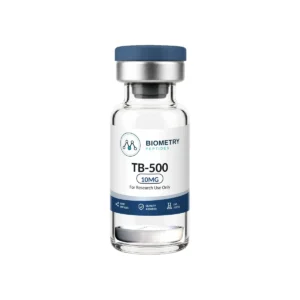
TB-500 (Thymosin Beta-4)
TB-500 refers to research use of Thymosin Beta-4, a naturally occurring 43-amino-acid peptide present in most cells that regulates actin polymerization. Research models have examined its role in cell migration, angiogenesis, and reduction of inflammation during tissue repair, with particular focus on cardiac, tendon, and dermal wound-healing research following injury.
| CAS number | 77591-33-4 |
| Molecular formula | C212H350N56O78S |
| Molecular weight | 4963.4 g/mol |
| Sequence / IUPAC | Ac-Ser-Asp-Lys-Pro-Asp-Met-Ala-Glu-Ile-Glu-Lys-Phe-Asp-Lys-Ser-Lys-Leu-Lys-Lys-Thr-Glu-Thr-Gln-Glu-Lys-Asn-Pro-Leu-Pro-Ser-Lys-Glu-Thr-Ile-Glu-Gln-Glu-Lys-Gln-Ala-Gly-Glu-Ser |
| Physical form | Lyophilised powder |
| Purity method | Verified by HPLC and mass spectrometry per batch COA (COA to be linked per batch). |
| Storage | Store lyophilised powder at -20°C, protect from light and moisture. Handle as a laboratory reagent; use standard cold-chain practice once reconstituted. |
View product
For research purposes only. Not for human or veterinary use.
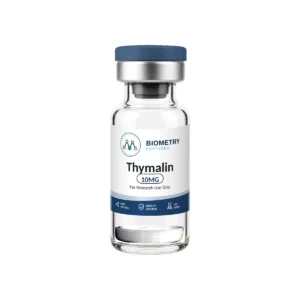
Thymalin
Thymalin is a low-molecular-weight polypeptide complex extracted from calf thymus tissue, rather than a single defined molecule. Research originating largely from gerontology and immunology literature has studied its effects on T-cell-mediated immune regulation and its proposed role in age-related immune function research.
| Sequence / IUPAC | Low-molecular-weight polypeptide complex (not a single defined molecule) |
| Physical form | Lyophilised powder |
| Purity method | Verified by HPLC and mass spectrometry per batch COA (COA to be linked per batch). |
| Storage | Store lyophilised powder at -20°C, protect from light and moisture. Handle as a laboratory reagent; use standard cold-chain practice once reconstituted. |
View product
For research purposes only. Not for human or veterinary use.
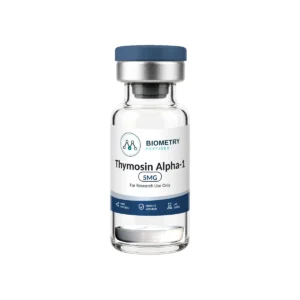
Thymosin Alpha-1
Thymosin alpha-1 is a 28-amino-acid peptide originally isolated from thymic tissue. It has been studied extensively in immunology research for its modulatory effects on T-cell maturation and function, including effects on dendritic cell activity, cytokine signaling, and innate immune responses, and remains a long-standing subject of research into immune system regulation.
| CAS number | 62304-98-7 |
| Molecular formula | C129H215N33O55 |
| Molecular weight | ~3108 g/mol |
| Sequence / IUPAC | Ac-Ser-Asp-Ala-Ala-Val-Asp-Thr-Ser-Ser-Glu-Ile-Thr-Thr-Lys-Asp-Leu-Lys-Glu-Lys-Lys-Glu-Val-Val-Glu-Glu-Ala-Glu-Asn |
| Physical form | Lyophilised powder |
| Purity method | Verified by HPLC and mass spectrometry per batch COA (COA to be linked per batch). |
| Storage | Store lyophilised powder at -20°C, protect from light and moisture. Handle as a laboratory reagent; use standard cold-chain practice once reconstituted. |
View product
For research purposes only. Not for human or veterinary use.